2 Jun 2026 · 6 min read
Hyperbaric Oxygen Therapy: Benefits & Honest Limits
For specific medical conditions it’s established. For general recovery, the mild HBOT most studios offer is promising but still emerging — we’ll tell you exactly where that line is.
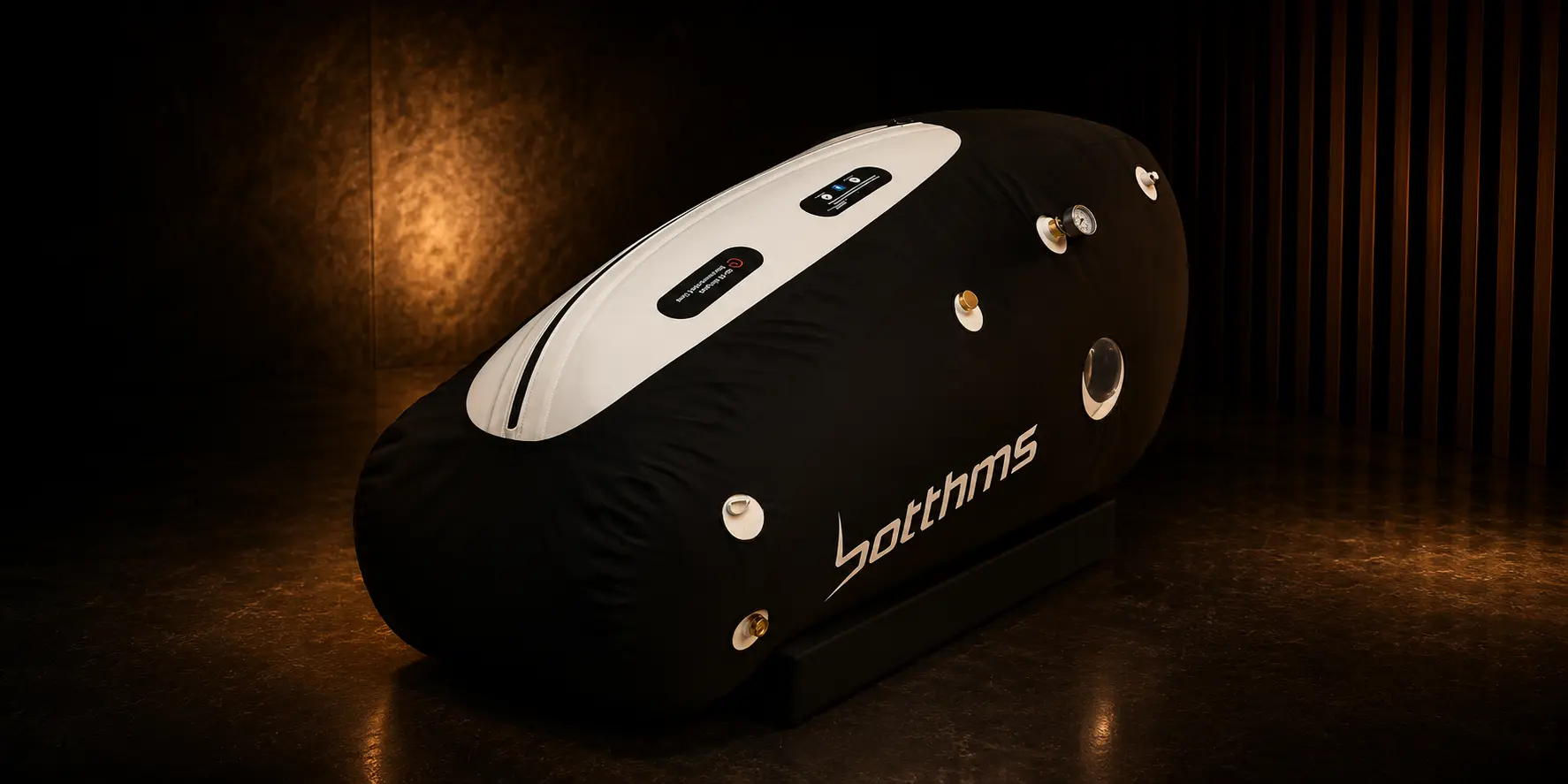
Short answer: hyperbaric oxygen therapy increases the amount of oxygen dissolved in your blood and tissues by having you breathe in a pressurised environment. For a specific set of medical conditions it’s an established, evidence-backed treatment. For general recovery and wellness — the mild HBOT most studios offer — the early research is genuinely interesting but still emerging. We’ll tell you exactly where that line is.
What is hyperbaric oxygen therapy (HBOT)?
In a hyperbaric chamber, ambient pressure is raised above normal atmospheric pressure (measured in ATA — atmospheres absolute). Under pressure, your blood plasma can carry far more dissolved oxygen than usual, so oxygen reaches tissues at higher concentrations. That extra oxygen availability is the mechanism behind every claimed benefit.
- —Medical-grade HBOT typically runs at 2.0–2.8 ATA in a clinical setting.
- —Mild HBOT — what most wellness hubs, including ours, offer — runs at 1.3–1.5 ATA for around 60 minutes. Gentler, more accessible, and the focus of the recovery and wellness conversation.
What is HBOT actually proven to do?
For certain conditions, the evidence is strong and HBOT is an accepted medical treatment — these are typically delivered in a hospital or specialist clinic, not a wellness studio. They include things like decompression sickness, certain non-healing wounds, and a handful of other approved indications.
That clinical track record is the reason the mechanism is taken seriously. It does not, by itself, prove that mild HBOT does the same things for a healthy athlete.
What about HBOT for recovery and wellness?
This is where honesty matters most, because it’s where the marketing gets loudest.
The proposed benefits for recovery — faster tissue repair, reduced inflammation, better sleep, improved sense of recovery after hard training — are biologically plausible and supported by an early and growing body of research. But much of that research is small, short, or in specific populations, and mild HBOT at 1.3–1.5 ATA is less studied than clinical high-pressure protocols.
So our honest position: mild HBOT is a promising, well-tolerated recovery tool with encouraging early evidence — not a miracle, and not a substitute for the basics (sleep, nutrition, load management). Anyone promising it cures conditions or guarantees performance gains is ahead of the data. We’d rather under-promise and let the experience speak.
Who is it for?
- —Athletes managing a heavy load who want to support recovery and tissue repair.
- —People recovering from soft-tissue strain who want to stack every reasonable advantage (alongside, not instead of, proper rehab).
- —Anyone working on sleep quality and overall recovery as part of a deliberate routine.
Who should be cautious?
HBOT is a genuine physiological intervention, not a nap in a tube. Avoid or seek medical clearance first if you have certain ear, sinus, or lung conditions (including a history of collapsed lung), uncontrolled conditions, or are pregnant. Ear-pressure equalisation is part of every session and we guide you through it. If you’re unsure, speak to our team or your doctor before booking.
How to use it at Botthms
Hyperbaric is the centrepiece of our deepest reset, Restore (hyperbaric, sauna, ice) — built not for a single workout but for nervous-system overload, poor-sleep weeks, and accumulated stress. It’s a 90-minute deliberate down-shift.
Book a hyperbaric session in Randburg. Mild HBOT at 1.3–1.5 ATA, 60 minutes, walk-in or member.
Frequently asked
What does a hyperbaric chamber do? It raises the pressure around you so your blood and tissues absorb more oxygen than at normal atmospheric pressure. That increased oxygen availability is the basis of its recovery and healing effects.
What is mild HBOT? Lower-pressure hyperbaric therapy at around 1.3–1.5 ATA — the gentler protocol used in wellness settings, versus the 2.0–2.8 ATA used clinically.
Is HBOT proven for recovery? For specific medical conditions, HBOT is established and evidence-backed. For general athletic recovery the evidence is promising but still emerging — we present it that way deliberately.
How long is a session? About 60 minutes, with guided pressure changes at the start and end.
Is it safe? For most healthy adults, yes. If you have ear, sinus or lung conditions, or are pregnant, get medical clearance first. We screen and guide every session.
Written by Renaldo Bothma. This article is educational and not a substitute for medical advice.
Try it at the hub
Hyperbaric Chamber
More oxygen. At pressure. Where it matters.