Recovery Boots
Accelerate what your body already knows how to do.
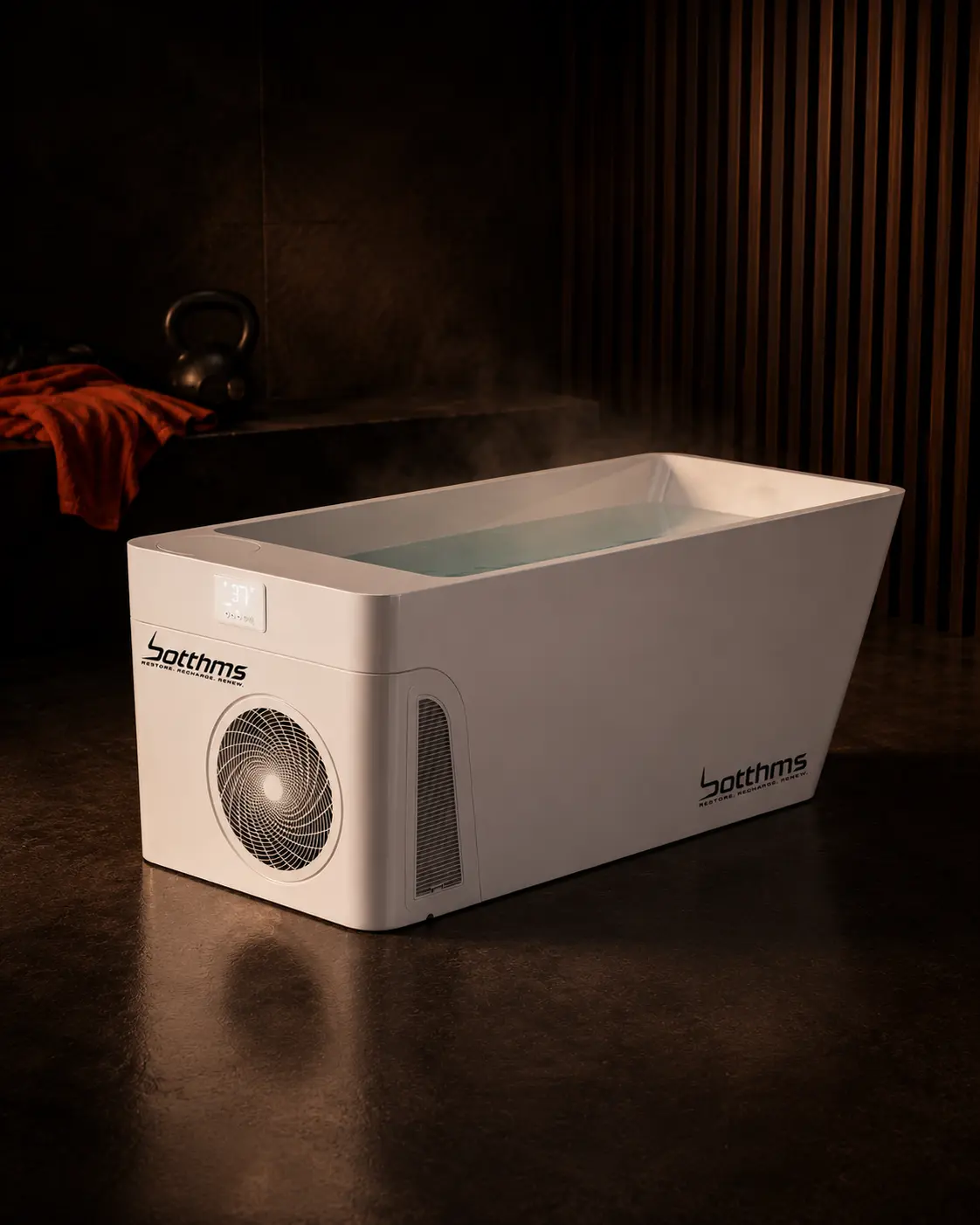
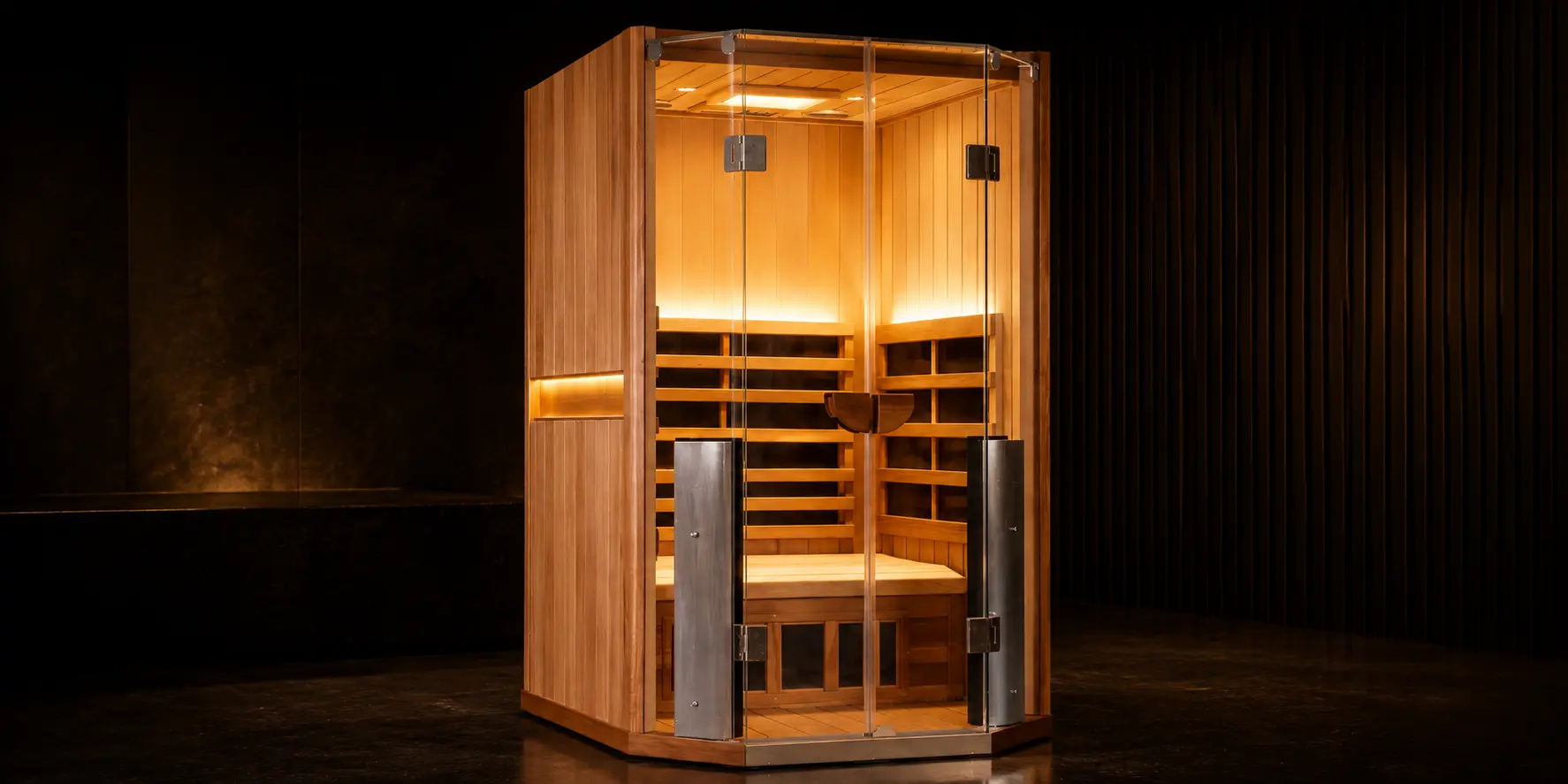
30-minute session. Can be stacked with infrared sauna or ice bath.
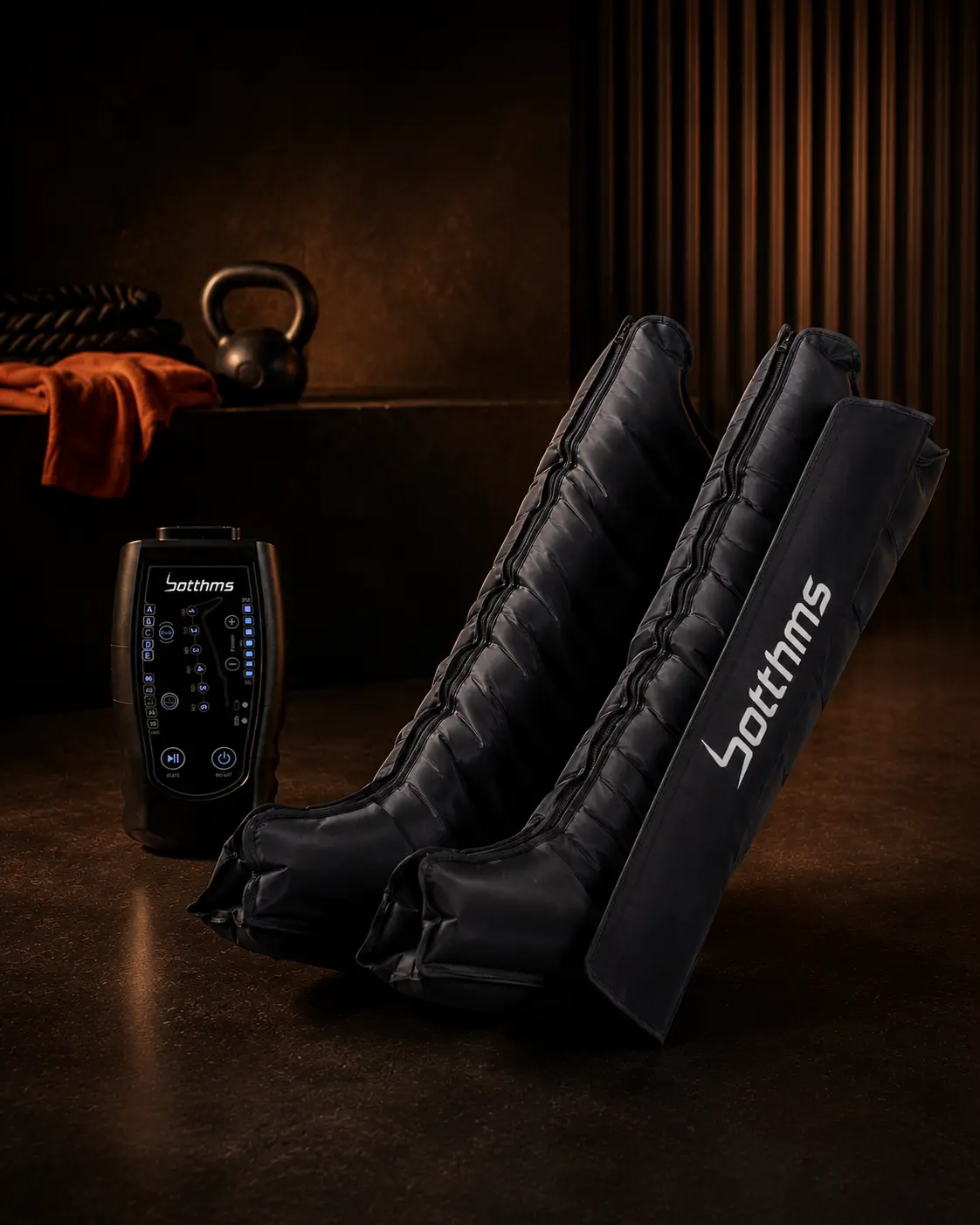 Compression
Sequential pneumatic compression drives recovery at the cellular level — moving lactate, fluid and inflammatory mediators away from worked tissue and back into circulation.
Accelerate what your body already knows how to do.
- —Reduces delayed onset muscle soreness by up to 40%
- —Accelerates lactate clearance post-training
- —Reduces lower limb oedema and swelling
- —Improves lymphatic and venous return
- —Activates parasympathetic rest-and-repair state
Sequential compression mimics the natural muscle-pump mechanism, driving metabolic waste toward lymphatic drainage points with graduated pressure gradients that passive rest cannot replicate.
Endurance athletes
After long runs, cycles or swims — when your legs are the limiting factor in your next session.
Post-game recovery
After team sport, martial arts or any discipline that leaves your lower body fatigued and inflamed.
Travel and desk workers
Long flights and desk-bound days create venous pooling. A 30-minute session restores circulation fast.
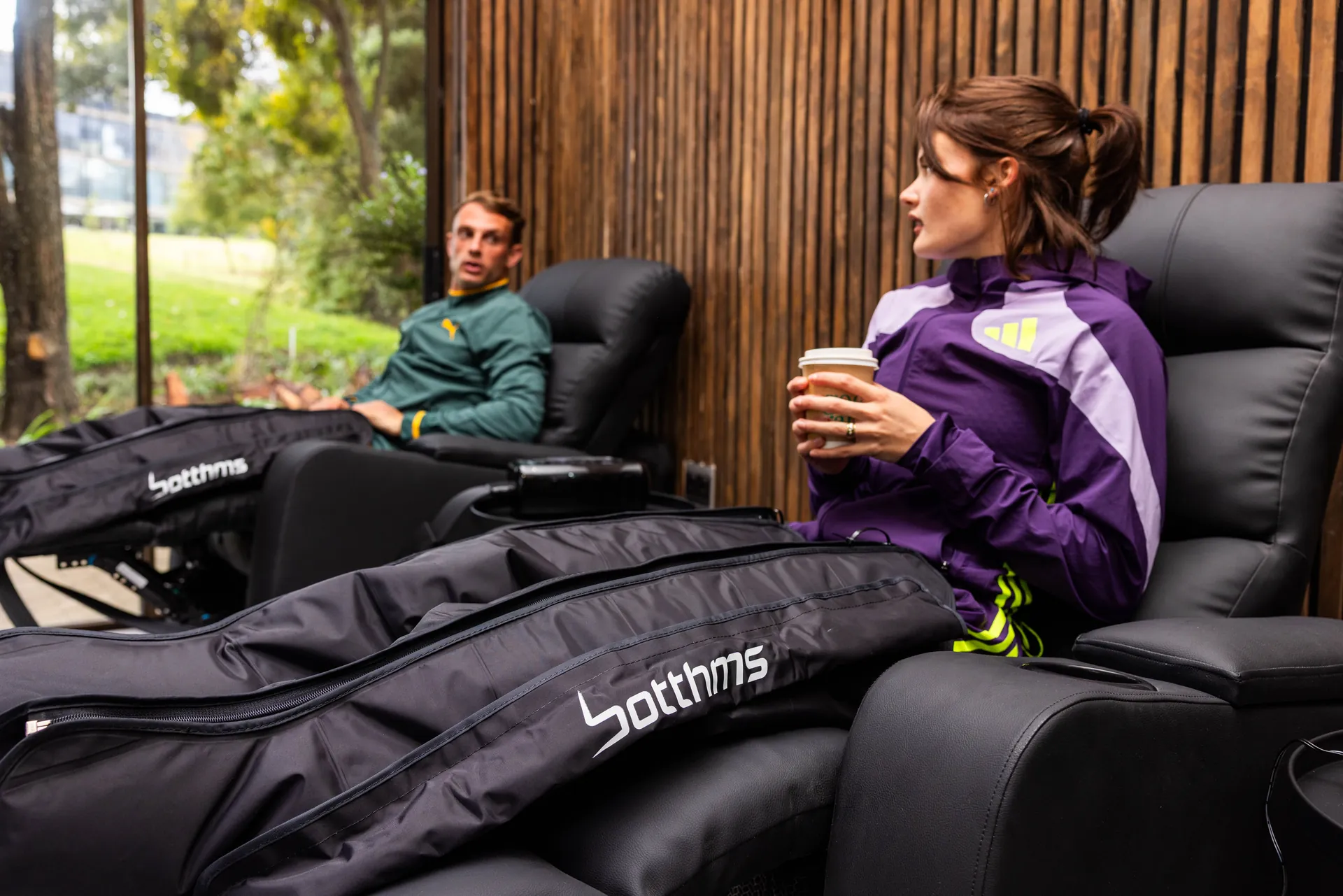
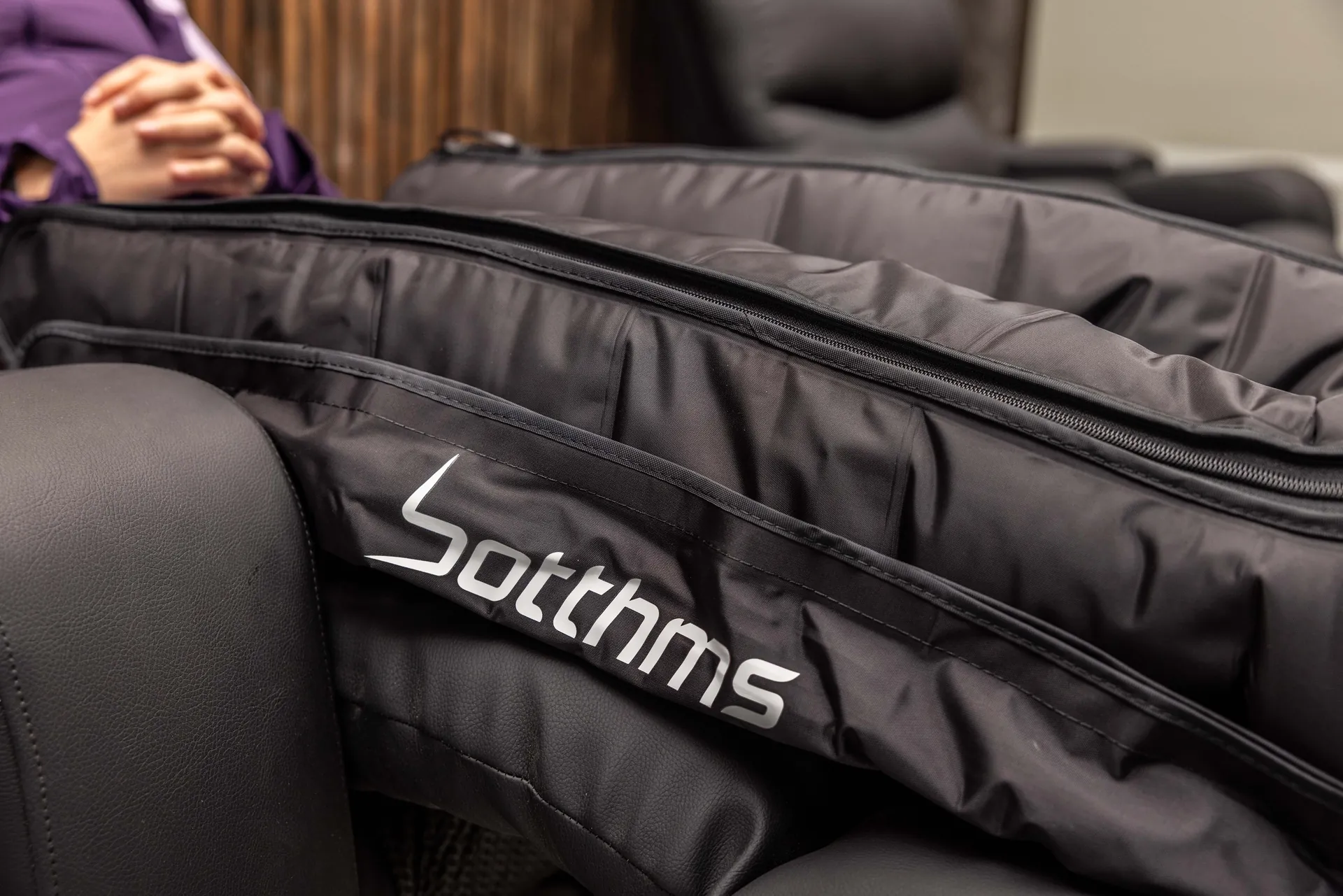
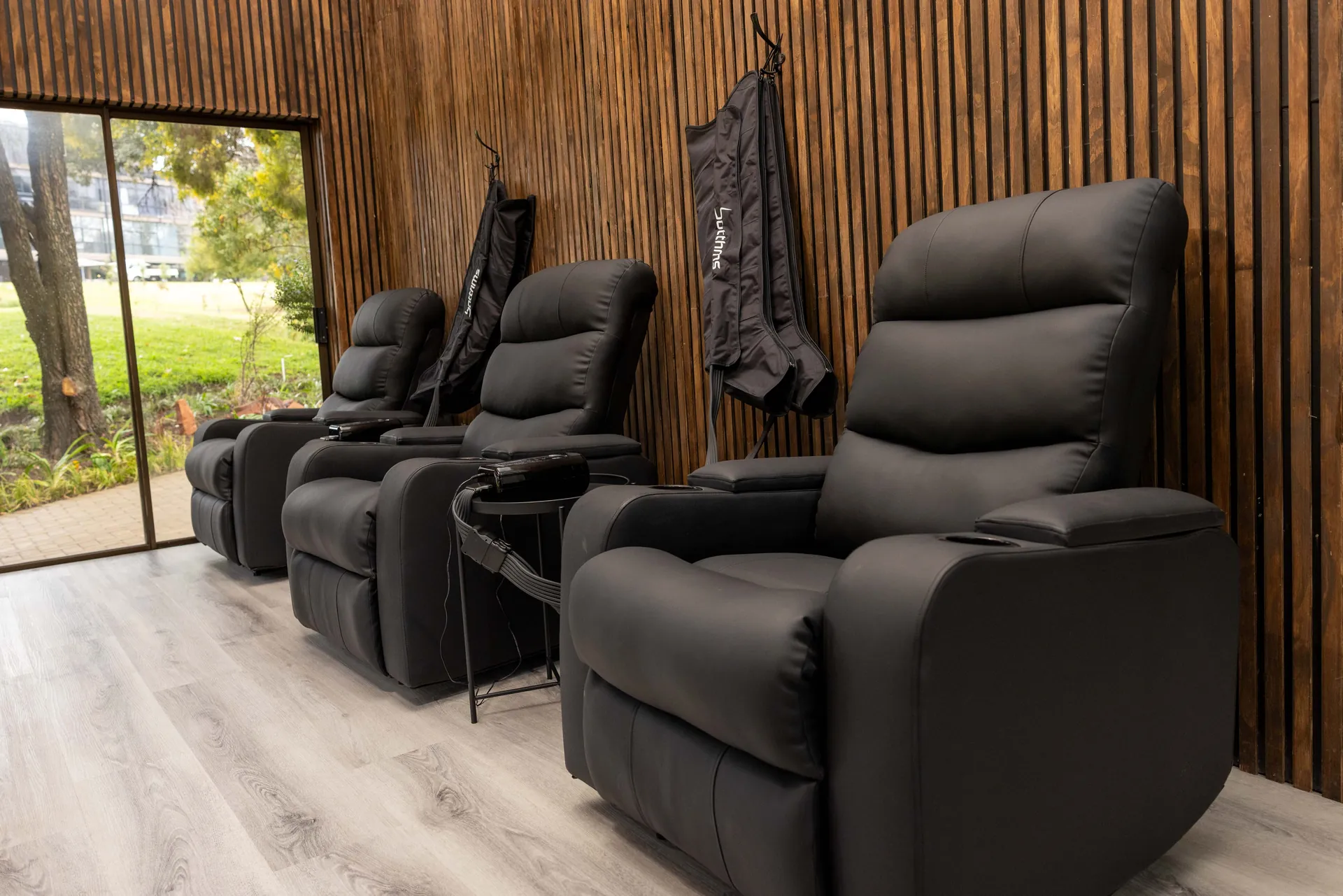
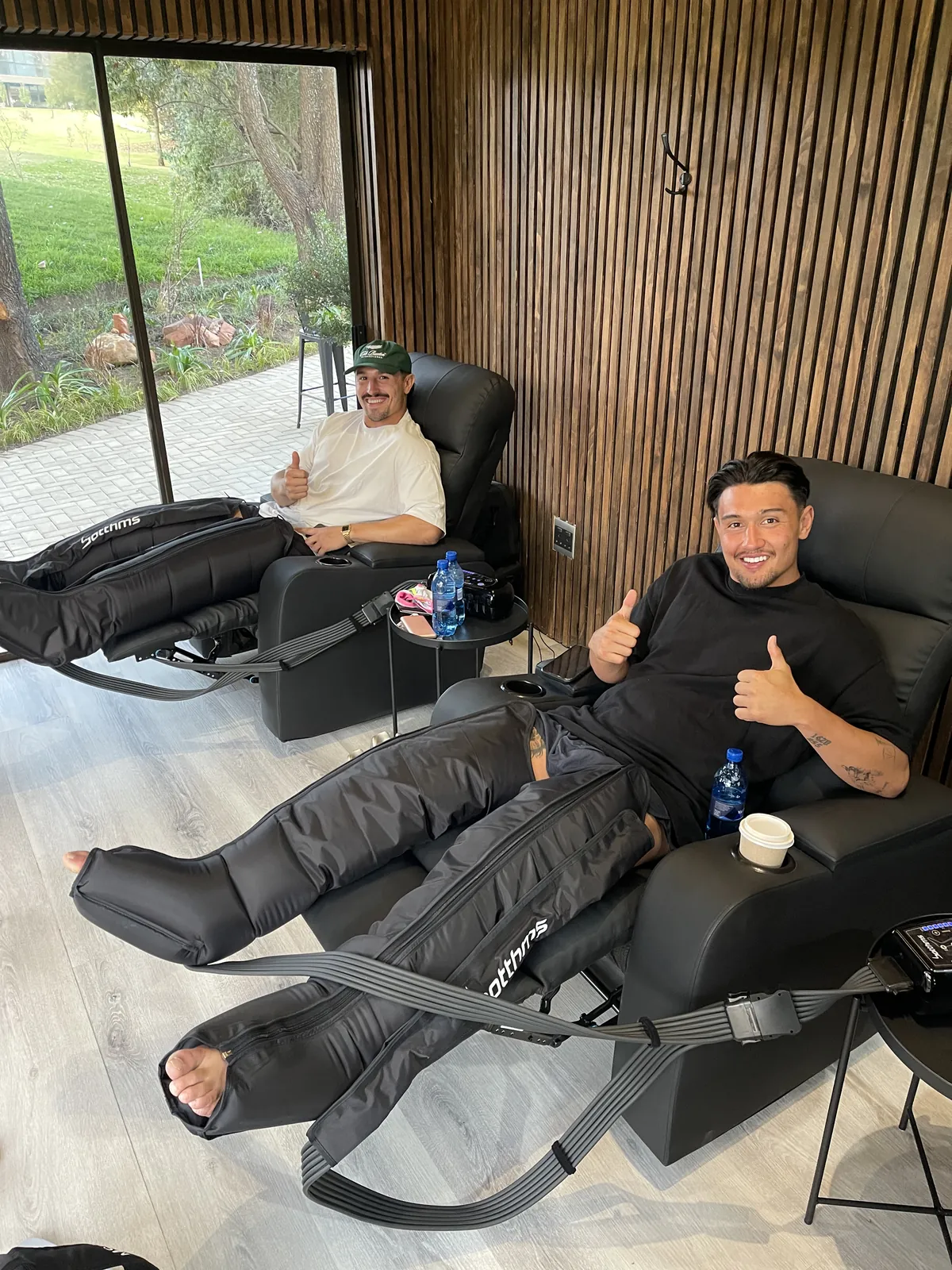
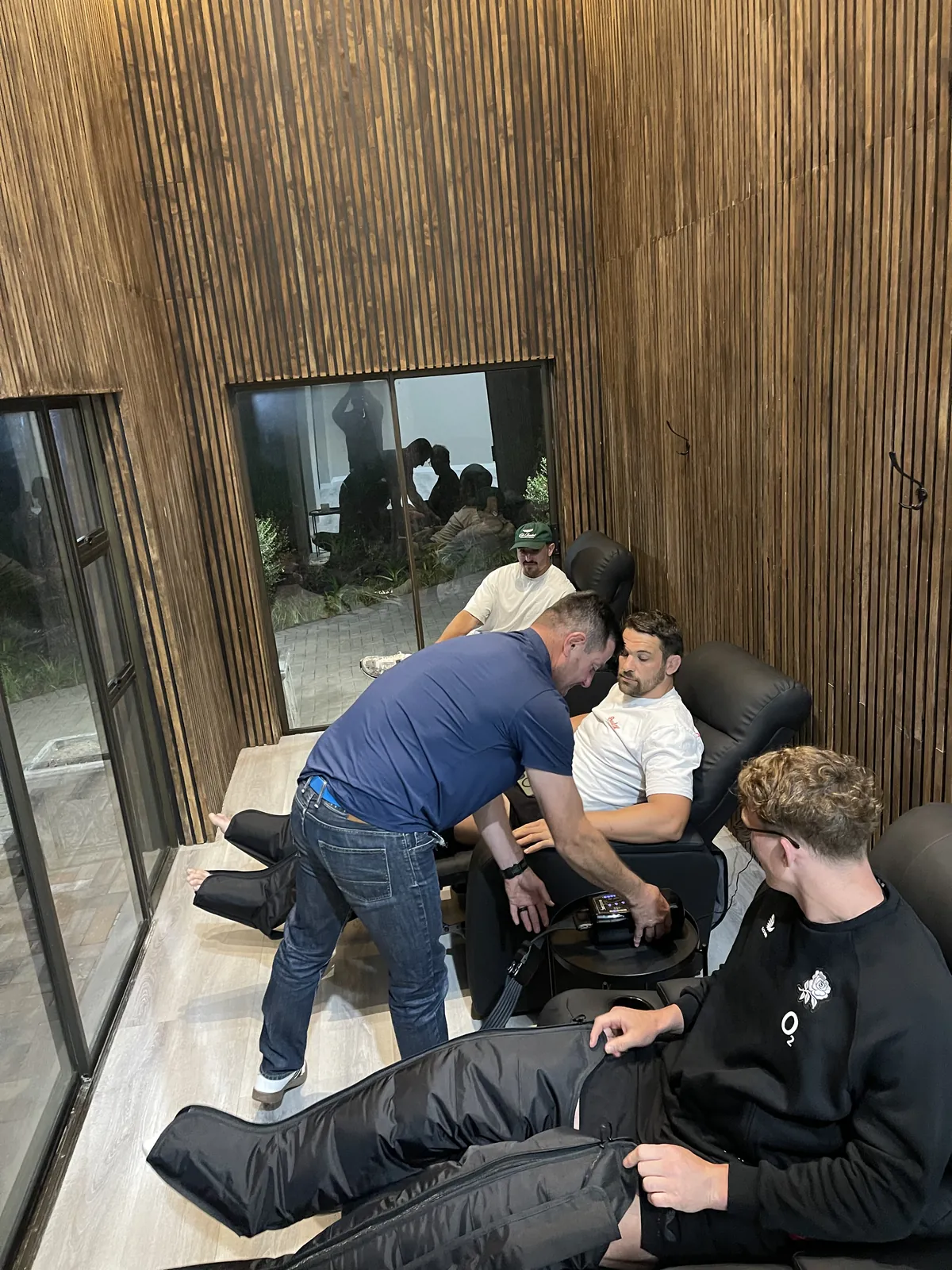
Athletes recover here.
Real sessions, shot at the hub — international athletes using the same recovery boots you can book in Randburg.
Check availability
and book online.
From the journal
Do Compression Boots Actually Work? The Evidence
Yes — for what they’re realistically meant to do. The honest breakdown.