Intermittent Vacuum Therapy
Rhythmic negative pressure. More flow to the legs.
30–40 minutes per session. For circulation goals, a course of 8–16 sessions over 3–6 weeks is typical.
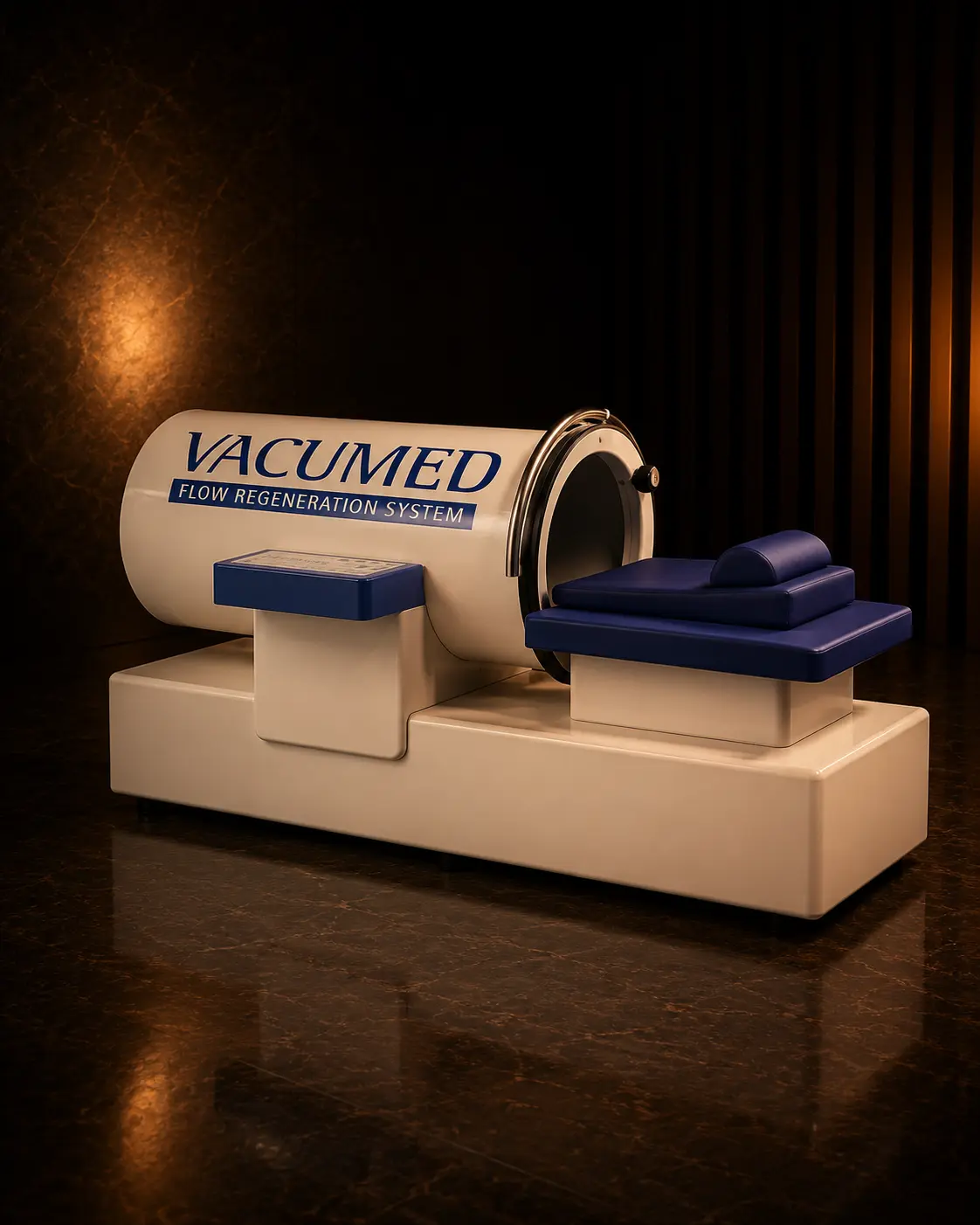 Circulation
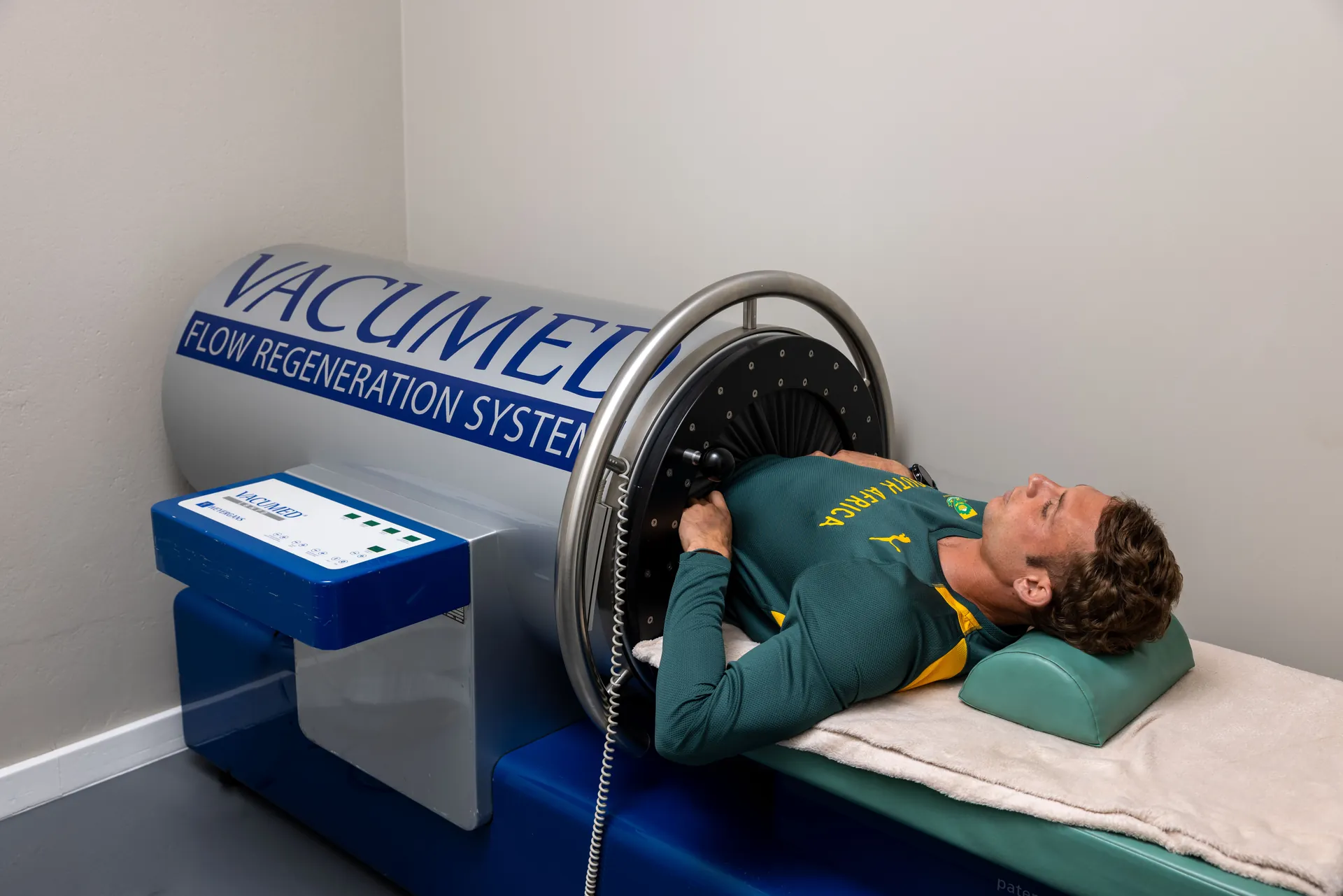
You lie back, clothed, with your lower body inside the chamber. It cycles gentle negative pressure on and off — drawing blood into the legs, then releasing. A passive, pain-free way to move circulation through the lower limbs. The technology traces back to the lower-body negative-pressure devices NASA developed to protect astronauts’ circulation in zero gravity.
Rhythmic negative pressure. More flow to the legs.
- —Increases arterial blood flow to the legs during the session
- —Raises skin blood flow and local circulation in the lower limbs
- —Completely passive and pain-free — no compression, stay clothed
- —Assists venous and lymphatic return through rhythmic cycling
- —Well tolerated, with a gentle, relaxing pulsation
Negative pressure around the limb widens the arteriovenous pressure gradient, drawing more blood in; the ambient phase lets it release. Measured directly, intermittent negative pressure at around −40 mmHg raises lower-limb blood-flow velocity by roughly 44% during application (Sundby et al., Physiological Reports, 2016). The cycling matters — constant negative pressure reduces flow; the rhythmic on/off is what drives the effect.
Heavy, tired legs
A passive session that moves blood through the lower limbs — a comfortable option after long days on your feet, long-haul travel, or hard training blocks.
Athletes between sessions
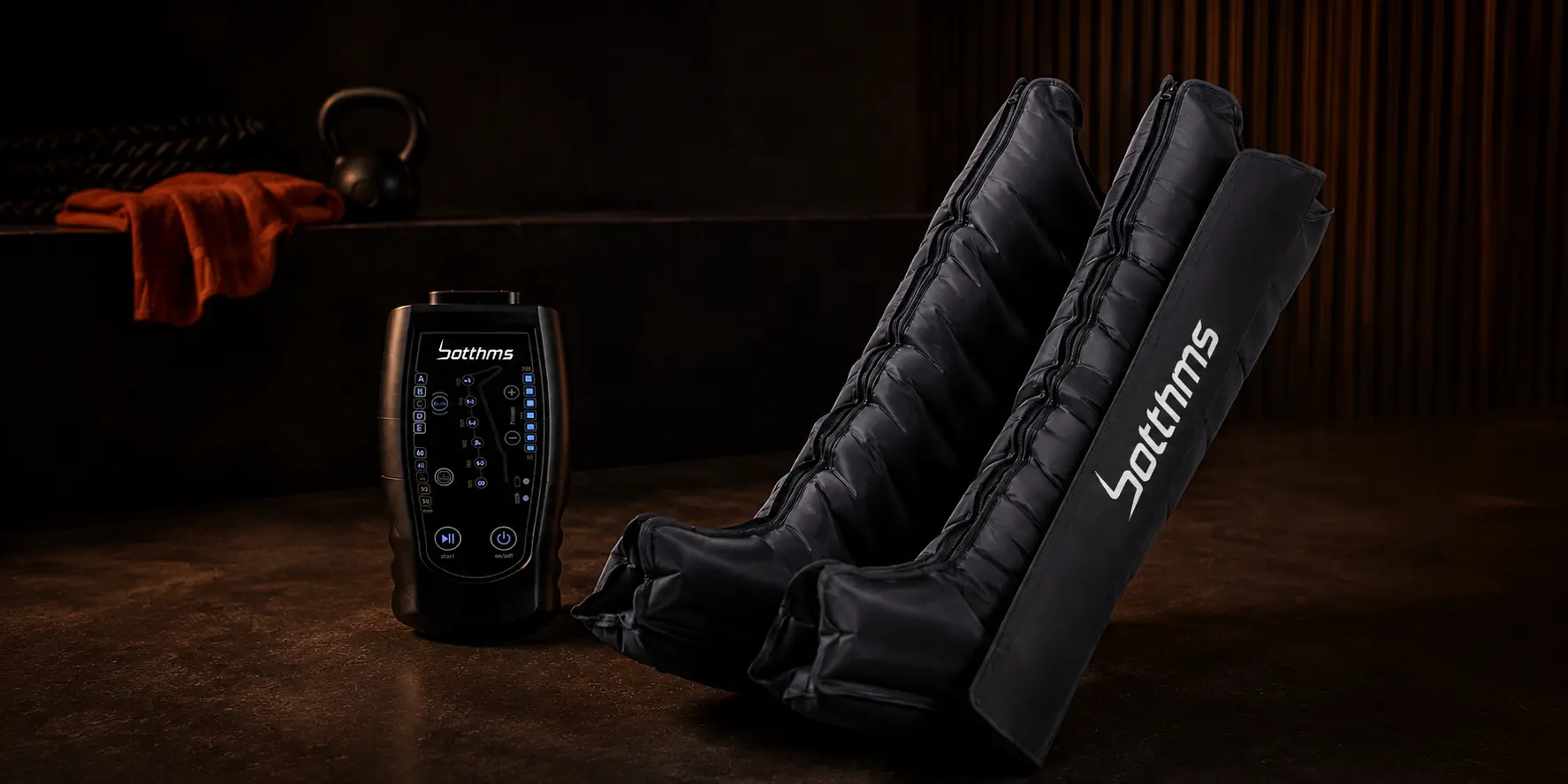
Reliably increases lower-limb blood flow while you rest. A hands-off, clothed alternative to compression boots, working in the opposite direction — drawing blood in rather than squeezing it out.
Circulation support
Used in vascular medicine as a passive way to stimulate lower-limb circulation. If you’re managing a vascular condition, treat this as a complement to medical care — see the note below.
Athletes recover here.
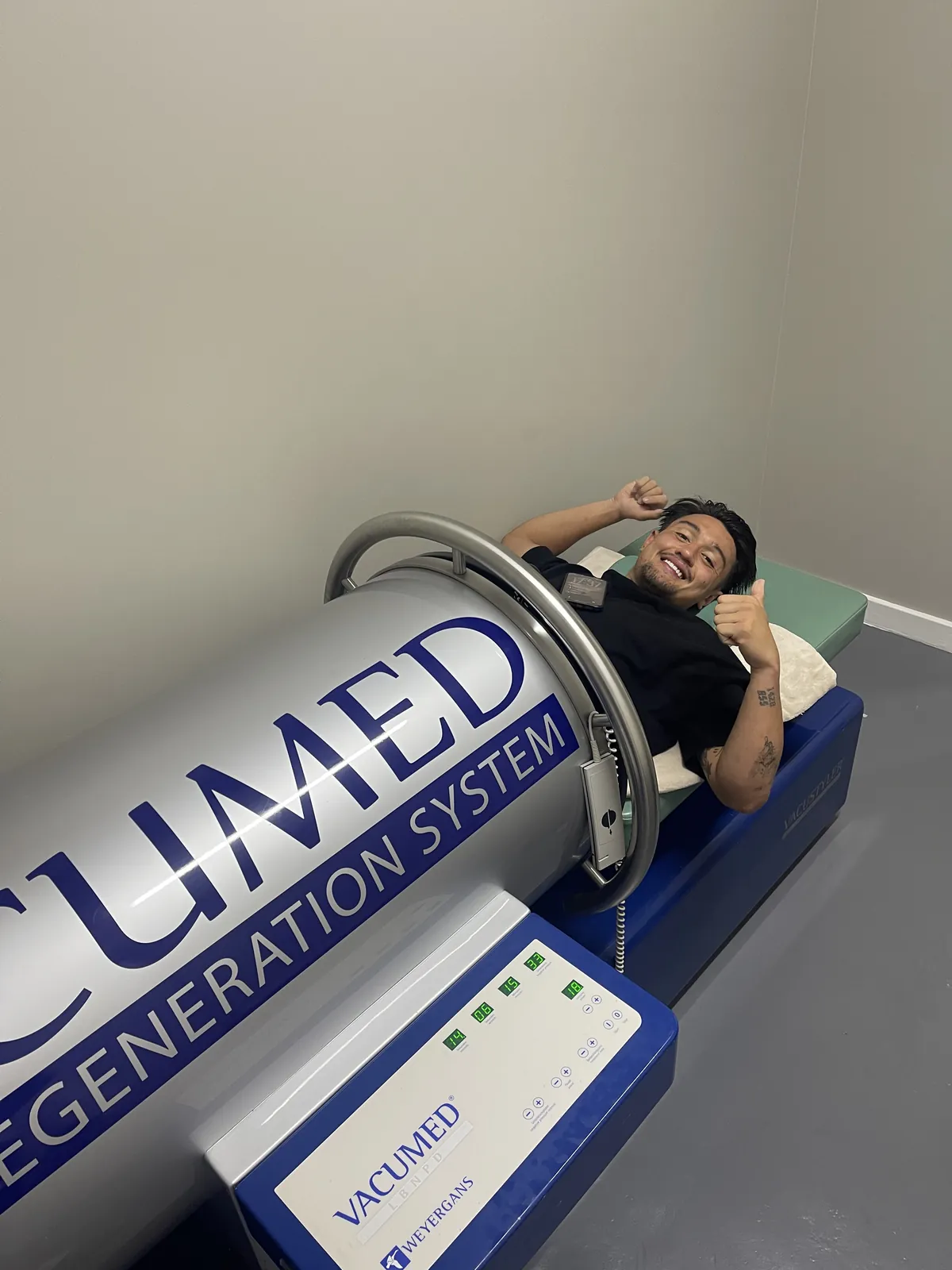
Real sessions, shot at the hub — international athletes using the same intermittent vacuum therapy you can book in Randburg.
Intermittent vacuum therapy is not suitable for everyone. Do not use it if you have an acute or suspected deep vein thrombosis (DVT) or thrombophlebitis, severe or decompensated heart disease, an acute infection in the legs (such as cellulitis), active cancer in the treatment area, recent leg surgery or revascularisation, or if you are pregnant. If any of these apply, get medical clearance before booking. All first-time clients complete a brief health screen, and anything relevant should be declared at booking.
Check availability
and book online.
The VACUMED is a CE-marked Class IIa medical device. At Botthms we offer it as a wellness and circulation service — it is not a substitute for medical care, and it does not treat or cure vascular disease. Management of any diagnosed condition belongs with your doctor. Clients with vascular, cardiac or other medical conditions should obtain medical clearance before use.