2 Jun 2026 · 5 min read
Cold Compression Therapy for Injury Recovery
Cold and pressure on the same spot — the right pick when one joint is angry, not the whole body.
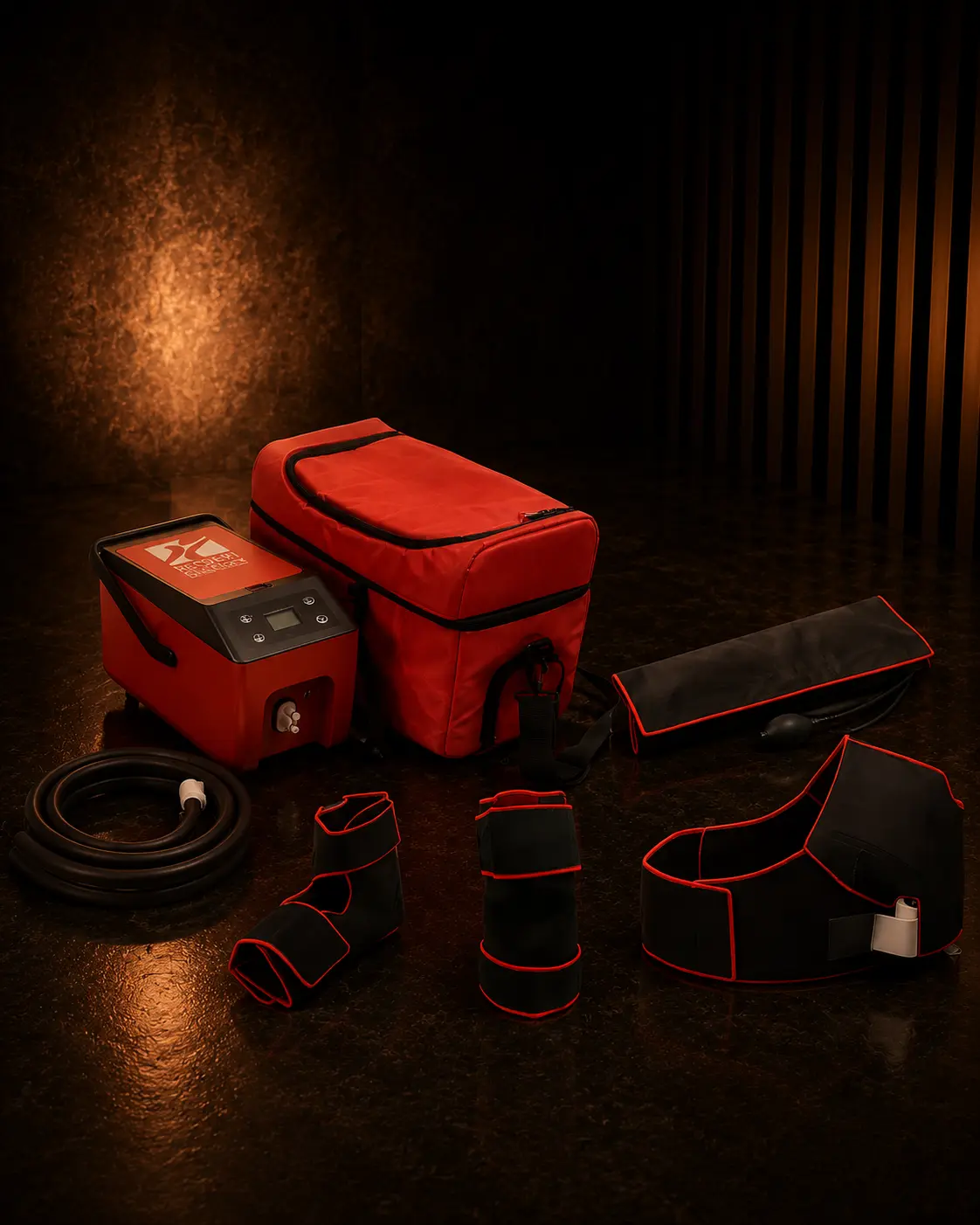
Short answer: cold compression therapy applies cold and mechanical pressure to the same area at the same time — combining two of the oldest, most reliable tools for managing acute swelling and sore joints. It’s targeted rather than whole-body, which makes it the right pick when one spot is angry: a tweaked knee, a sore ankle, an inflamed joint after a hard session. Here’s how it works and when to use it.
What is cold compression therapy?
It pairs cold (which reduces blood flow, numbs pain, and limits swelling) with compression (which applies pressure to control fluid build-up and support the tissue). Doing both together, on a specific area, does more than either alone — cold dampens the pain and inflammatory response while compression keeps swelling in check.
You may have seen clinical systems like Game Ready that circulate chilled water through a compression wrap. The principle is the same: targeted cold plus pressure, held on the problem area. At Botthms it’s offered as a targeted treatment for sore joints.
How is it different from an ice bath?
An ice bath is whole-body cold immersion — systemic, for general recovery, mood, and overall soreness. Cold compression is local and targeted — for one joint or area that’s swollen, sore, or recovering — and it adds the pressure element an ice bath can’t.
Different jobs. You’d ice bath after a hard match for the whole system; you’d use cold compression on the one knee that took a knock.
What does the evidence say?
Cold and compression are both long-established for acute soft-tissue and joint management — reducing pain, swelling, and fluid accumulation in the early phase of an injury or after a procedure. Combining them is a sensible, mechanism-driven extension of that, and is widely used in sports medicine for post-injury and post-surgical swelling control.
The honest nuance worth knowing: thinking on icing has shifted. The classic RICE protocol (Rest, Ice, Compression, Elevation) has been revised by many sports-medicine practitioners toward frameworks like PEACE & LOVE, partly because some inflammation is part of healing and you don’t want to fully suppress it for days on end. The modern take: cold and compression are excellent for early pain and swelling control, but they’re a tool for the acute phase, not something to lean on indefinitely while avoiding the gentle movement and loading that tissue needs to heal.
So: great in the first phase of a sore or swollen joint; not a substitute for proper rehab if the problem persists. If it’s not settling, that’s a physio conversation.
When to use cold compression therapy
- —A specific sore or swollen joint after training or competition.
- —Acute knocks and tweaks — the early phase of a minor soft-tissue niggle (alongside sensible assessment).
- —Targeted pain relief when you want cold and support on one area, not a whole-body plunge.
- —Post-procedure swelling control, with medical guidance.
Who should be cautious?
Avoid prolonged cold on areas with poor circulation or reduced sensation, and check with a clinician for cold-sensitivity conditions. If a joint is significantly swollen, unstable, or painful to load, get it assessed — cold compression manages symptoms, but a real injury needs a diagnosis.
How to use it at Botthms
Cold compression is a focused, stand-alone treatment for a specific area. If your whole system is fatigued rather than one joint being sore, a protocol like Renew or a contrast session may suit you better — ask our team and we’ll point you to the right tool.
Book cold compression therapy in Randburg. Targeted cold + compression for sore joints, walk-in or member.
Frequently asked
What is cold compression therapy used for? Managing pain and swelling in a specific sore or injured joint or area, by combining cold and mechanical pressure on the same spot.
Is cold compression better than just icing? For a targeted injury, combining cold with compression controls swelling better than cold alone. For general, whole-body recovery, an ice bath is the better tool.
Is RICE still recommended? The principles still help in the acute phase, but many practitioners have moved toward updated frameworks (like PEACE & LOVE) that emphasise not over-suppressing inflammation and reintroducing gentle movement as tissue heals.
How long should I apply cold compression? In focused sessions during the early, painful or swollen phase — not continuously for days. If it’s not settling, get the area assessed.
Cold compression or physio — which do I need? Cold compression manages the symptoms of a sore joint. If there’s a real or recurring injury, see a physio for a diagnosis and rehab plan.
Written by Renaldo Bothma — former professional rugby player and co-founder of Botthms.
Try it at the hub
Cold Compression Therapy
An ice bath cools the whole body. A cold-compression session cools the joint that hurts — and pumps it.