Cold Compression Therapy
An ice bath cools the whole body. A cold-compression session cools the joint that hurts — and pumps it.
20-minute sessions per joint. Skin temperature held at 10–15°C — the evidence-backed therapeutic window.
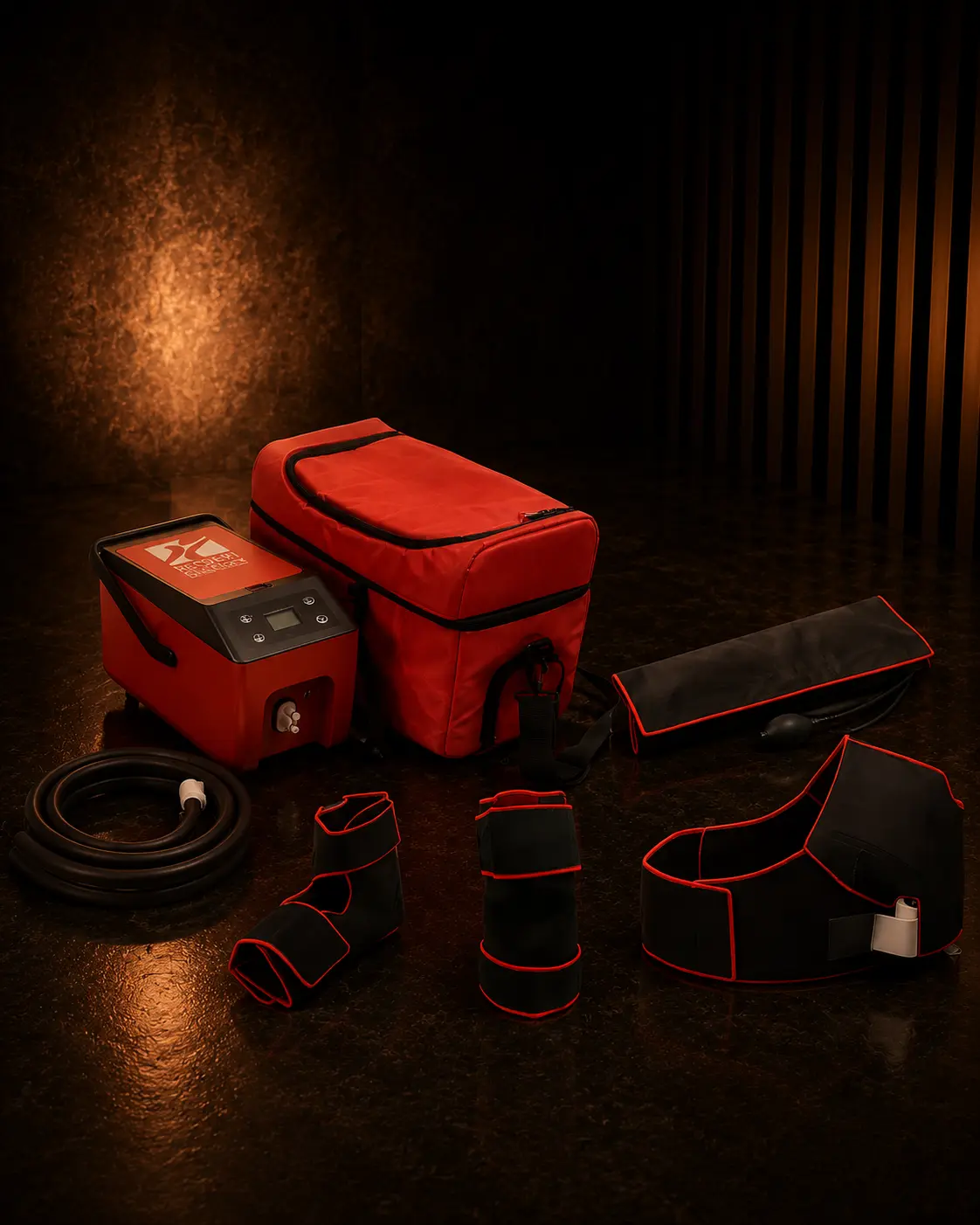 Targeted
Cold compression delivers controlled cold (4–10°C) combined with intermittent pneumatic compression directly to a single joint via an anatomical cuff — knee, shoulder, ankle, hip, or back. It is the precision recovery tool in the Botthms stack: where an ice bath is whole-body and non-specific, cold compression is targeted, supervised, and built for joints that need direct attention.
An ice bath cools the whole body. A cold-compression session cools the joint that hurts — and pumps it.
- —Targets a specific joint — knee, shoulder, ankle, hip, or back. Only the area that needs treatment.
- —Reduces post-training joint soreness. Controlled cooling slows the inflammatory response and reduces local swelling.
- —Pumps fluid out. Intermittent pneumatic compression mechanically clears interstitial fluid and inflammatory exudate — what ice alone cannot do.
- —Supports recovery after acute soft-tissue overload. Built for the joint that gave you trouble in training or on race day.
The cuff combines two therapies. Cold lowers tissue temperature, narrows superficial blood vessels and slows the inflammatory cascade — limiting swelling in the first 24–72 hours after intense load. Intermittent pneumatic compression (5–75 mmHg) mimics natural muscle contractions to pump fluid and inflammatory by-products out of the joint. Su et al. 2012 (n=280, TKR) showed less pain medication and higher satisfaction vs ice alone; Waterman et al. 2012 (ACL recon) found 83% off narcotics by 6 weeks vs 28% on ice alone; Song et al. 2016 meta-analysis (10 trials, 522 patients) confirmed compression adds independent benefit over cryotherapy alone.
Active adults with a sore joint
Knee, shoulder, ankle, hip or back that hurts after training. Runners, cyclists, racket-sport players and weightlifters with a recurring problem joint — the modality is built around treating one area at a time.
Post-event recovery
For the joint that took the load on race day or in competition. Targeted cold plus pumping action shortens the first 24–72 hour swelling window when it matters most.
Adjunct to physiotherapy
An adjunct — not a replacement — for clients in active physio. Reduces local swelling and pain between sessions so rehab loading can progress on schedule.
Cold compression is not appropriate for everyone. The first-visit screen checks for cold sensitivity conditions (Raynaud’s, cold urticaria), circulatory conditions (DVT, peripheral vascular disease, severe diabetic neuropathy), open wounds in the treatment area, and pregnancy over the abdomen. Clients on anticoagulant therapy or with severe uncontrolled hypertension require practitioner clearance before their first session.
Check availability
and book online.
From the journal
Cold Compression Therapy for Injury Recovery
Cold and pressure on the same spot — the right pick when one joint is angry, not the whole body.