8 Jul 2026 · 5 min read
Oxygen Therapy (Nanobubble Hydrotherapy): Benefits & Evidence
What oxygen nanobubble hydrotherapy actually is, what the evidence does and doesn’t show, and who it’s for — an honest look at one of the newer recovery modalities.
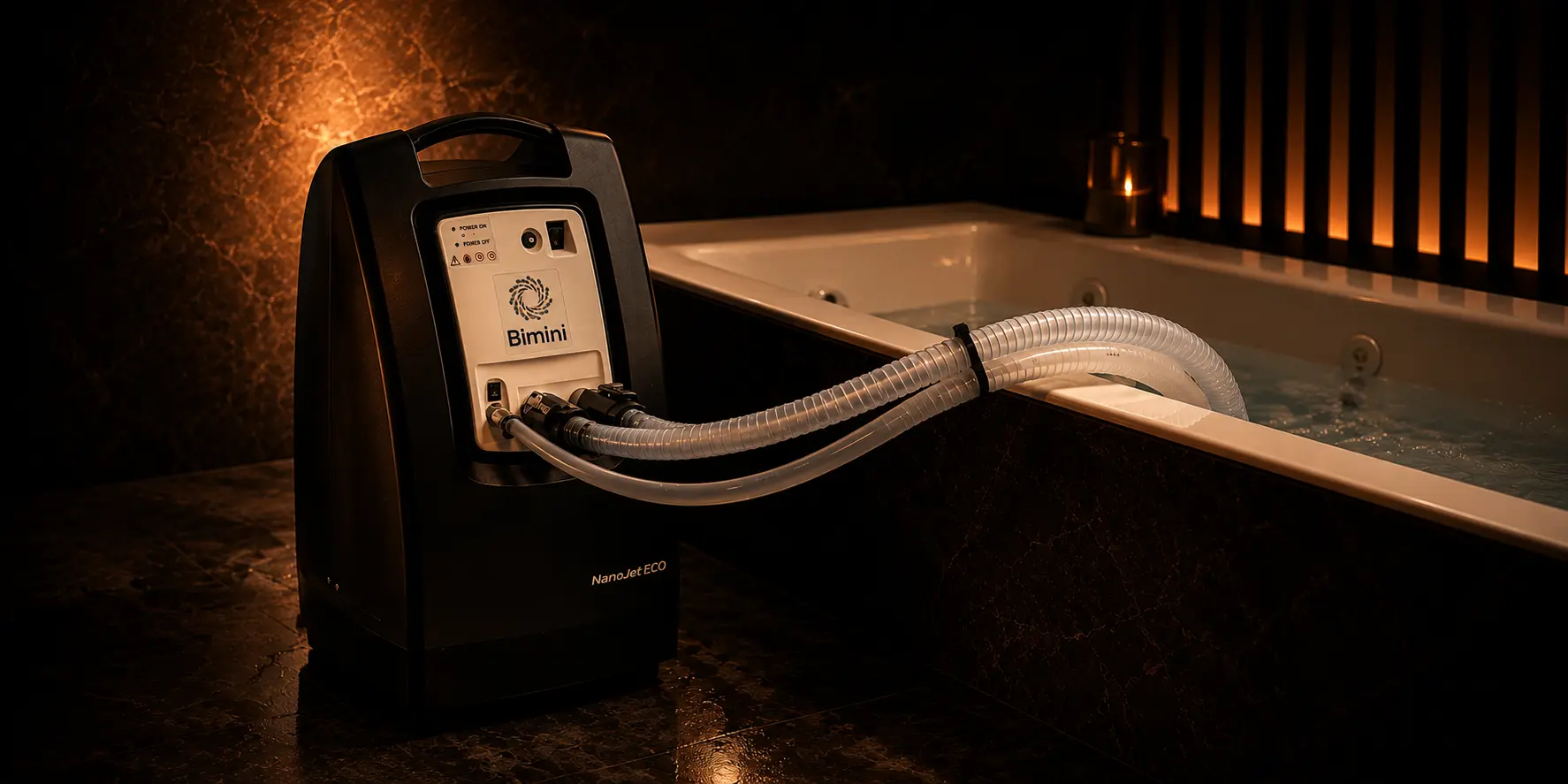
Short answer: oxygen therapy at Botthms is a warm-water soak infused with billions of ultra-fine oxygen nanobubbles. It combines the circulation and calm of warm-water immersion with oxygen perfusion into the skin and soft tissue. It’s a newer, relaxation-and-recovery modality — the experience is well-loved, and the deeper physiological claims are still emerging rather than settled.
What is oxygen nanobubble therapy?
You sit in 40°C water infused with oxygen nanobubbles — bubbles so small (roughly 2,500× smaller than a skin pore) that they stay suspended in the water and can pass across the skin surface rather than rising and popping like normal bubbles. At Botthms this runs on the Bimini NanoJet system, the same technology used by Rice University Sports Medicine in collegiate athletic recovery.
Think of it as hydrotherapy reimagined: the warm-water immersion does the familiar work of promoting circulation and relaxation, and the oxygen nanobubbles are the novel layer on top.
What are the benefits?
- —Deep relaxation and mental clarity. This is the most consistent, reliable effect — most people finish a session noticeably calmer and clearer.
- —Warm-water immersion at 40°C supports circulation, a sense of recovery, and a down-shift in the nervous system.
- —Oxygen perfusion into soft tissue while you soak — the mechanism the nanobubble technology is built around.
- —Used in a real athletic setting: Rice University Sports Medicine has run the NanoJet system with over 100 athletes.
What does the evidence actually say?
Here’s the honest framing, because it matters. The relaxation and warm-immersion benefits are on solid, well-understood ground. The specific recovery claims for oxygen nanobubbles are earlier-stage — supported so far mainly by observational data and use in athletic programmes rather than large controlled trials. Early observational data suggests improvements in some recovery markers, but results vary between people, and this is a modality where we’d rather under-promise. Treat it as a genuinely pleasant recovery and relaxation tool with promising signals, not a proven performance intervention.
Who is it for?
- —Anyone who wants the recovery and calm of warm-water immersion with something a little more novel than a bath.
- —Athletes stacking easy, low-stress recovery between hard sessions.
- —People who find cold plunges too intense but still want a restorative water-based session.
How to use it at Botthms
Oxygen therapy is a standalone session at the Botthms Wellness Hub in Randburg — a warm, passive soak you can book on its own or stack after a harder modality like an ice bath or sauna. Sessions are relaxed and low-effort by design: you get in, you soak, you leave calmer.
Book oxygen nanobubble therapy in Randburg. Warm-water immersion, walk-in or member.
Frequently asked
Is oxygen therapy the same as hyperbaric oxygen? No. Hyperbaric oxygen therapy (HBOT) uses a pressurised chamber to drive oxygen into the blood plasma. This is warm-water hydrotherapy with oxygen nanobubbles — a different modality with a different mechanism. We offer both separately.
Is it the same as ozone therapy? No — ozone (O3) is a different molecule and a different treatment entirely. This is plain oxygen in nanobubble form, in warm water.
Will I feel a big performance boost? Manage expectations honestly: the reliable effect is deep relaxation and a sense of recovery. The physiological recovery benefits are promising but still emerging.
How warm is it? Around 40°C — comfortably warm, closer to a hot bath than a spa jet.
Written by the Botthms team.
Try it at the hub
Oxygen Therapy
Hydrotherapy reimagined.